The short version
A home parasite cleanse follows three phases: preparation (open drainage pathways, clean up the diet), active cleanse (introduce antiparasitic herbs and binders), and maintenance (rebuild the gut and consider repeating). The whole process takes about 30 to 90 days depending on the protocol. This guide walks through each phase with practical instructions you can follow at home.
Before you start: what you need to know
Doing a parasite cleanse at home is accessible, but it is not something to approach casually. The difference between a productive cleanse and a miserable one usually comes down to preparation, pacing, and having the right supplies on hand before you begin.
This guide outlines a general framework based on the principles most commonly recommended by herbalists and integrative practitioners. It is not a substitute for professional medical advice, especially if you have a confirmed parasitic infection, are pregnant or breastfeeding, or are managing a chronic health condition. If any of those apply, work with a qualified provider who can tailor the protocol to your situation.
Research on herbal antiparasitic compounds is growing. A 2021 review published in the Journal of Ethnopharmacology documented the antiparasitic activity of numerous plant compounds, including those found in wormwood, black walnut, and clove. Most of the evidence is from in vitro and animal studies, and human clinical trials remain limited. That said, these herbs have centuries of traditional use behind them, and many practitioners report consistent clinical results. The Amish parasite cleanse, one of the most widely searched folk protocols, is built on exactly this combination.
First: do you actually have parasites?
Worth a pause before you buy anything. A lot of what gets blamed on parasites overlaps with irritable bowel, food intolerance, thyroid problems and autoimmune conditions, and starting a cleanse for the wrong reason wastes a month.
No single symptom confirms anything. But clusters of these are what send most people looking:
- Persistent bloating, gas or irregular bowels that no diet change fixes
- Fatigue that rest does not touch
- Strong sugar or carbohydrate cravings
- Teeth grinding in your sleep
- Skin that flares for no clear reason: rashes, hives, eczema
- Brain fog and trouble concentrating
- Waking between 2 and 4 am, night after night
- Joint or muscle aches without an injury
- Iron deficiency that does not respond to supplements
- Visible material in your stool: white specks, strings, segments
If several of those sound familiar, testing is a reasonable next step. The standard stool ova-and-parasite exam looks for eggs and organisms under a microscope, and it is worth doing, but it misses a lot. Single samples return false negatives often, and protozoa are especially easy to miss. Collecting over three days, or using a PCR-based panel that detects parasite DNA, catches more. Blood antibody tests and imaging exist for tissue-dwelling organisms and are a doctor’s call.
A negative result does not rule you out. Many practitioners will run a trial cleanse on symptom patterns alone. A positive result changes the plan: that is a diagnosis, and it belongs with your doctor before it belongs with a herb. The fuller list of signs is in the parasite symptoms guide.
Phase 1: Preparation (1 to 2 weeks)
The preparation phase is the most overlooked and arguably the most important part of the process. Its purpose is to make sure your body can handle the toxins that will be released when parasites start dying. Skipping this phase is the single most common reason people feel terrible during a cleanse and give up early.
Worth knowing
A complete parasite life cycle is typically two to four weeks. Running a cleanse for less than that often means a new generation hatches after the adults have been addressed, which is why most protocols run for 30 days minimum.
Open your drainage pathways
Drainage pathways are the routes your body uses to eliminate waste: the colon, liver and bile ducts, kidneys, lymphatic system, and skin. When these pathways are congested, the debris from dying organisms recirculates and causes a Herxheimer reaction (die-off) that can feel worse than the original symptoms.
Here is what to focus on during preparation:
Bowel regularity. You need at least one complete bowel movement per day before starting the active cleanse. If you are not there yet, consider magnesium citrate (300 to 400 mg at bedtime), increased fiber from whole foods, or a gentle herbal bowel formula. This is non-negotiable. If the exit door is closed, everything backs up.
Hydration. Aim for half your body weight in ounces of water daily, minimum. Add a pinch of unrefined sea salt or mineral drops for electrolyte balance. Proper hydration supports every drainage pathway.
Liver and bile support. Gentle liver-supporting herbs like milk thistle, dandelion root, or artichoke leaf can help prepare the liver for the increased processing load. Bitter foods (arugula, lemon, ginger) also stimulate bile flow.
Lymphatic movement. The lymphatic system does not have its own pump; it relies on movement. Walking, rebounding (mini-trampoline), dry brushing, and gentle stretching all encourage lymph flow.
Clean up the diet
During preparation and throughout the active cleanse, dietary adjustments support the protocol. The general guidelines are consistent across most practitioners.
Reduce sugar and refined carbohydrates. Parasites, along with Candida and other opportunistic organisms, thrive on sugar. Cutting back on added sugars, white flour, and processed snacks creates a less hospitable environment.
Eat whole, nutrient-dense foods. Vegetables, quality proteins, healthy fats, and foods with antiparasitic properties (pumpkin seeds, garlic, papaya seeds, coconut, ginger) form the foundation.
Reduce alcohol. Alcohol taxes the liver, and your liver is about to do extra work. Most protocols recommend eliminating alcohol entirely during the cleanse.
Consider reducing dairy and gluten temporarily. Some practitioners recommend this to reduce gut inflammation during the cleanse. This is not universally required but is a common suggestion, especially for people with existing digestive sensitivities.
Phase 2: The active cleanse (30 days)
Once drainage is flowing and your diet is cleaned up, you begin introducing antiparasitic herbs. Here are the most commonly used compounds and how they work together.
What readers are saying
“I am in the beginning stages of this kit and I already see results. Skin is clearer, bowel movements more frequent, and plenty of energy. Very excited to see how much better I will feel at the end of this. Super easy to use.”
Briyanna L., verified ParaFy Kit buyer
The core herbs
Wormwood (Artemisia absinthium). Contains artemisinin, a compound studied for its activity against a range of parasites including helminths and protozoa. Wormwood is the anchor of most traditional antiparasitic formulas. It has a bitter taste, which also stimulates bile production.
Black walnut hull (Juglans nigra). The green hull of the black walnut contains juglone, a compound with documented antimicrobial and antiparasitic properties. It is most commonly used in tincture form and is traditionally associated with addressing adult worms and larvae.
Clove (Syzygium aromaticum). Clove contains eugenol, which has been studied for its ability to disrupt parasite eggs. This is a critical piece of the puzzle, because killing adults without addressing eggs means reinfection from the next hatching cycle.
These three herbs are often called the “antiparasitic trio” and are the foundation of many herbal cleanse protocols. Some formulas add additional herbs like neem, vidanga, or oregano oil for broader spectrum coverage.
Binders: why they matter
When parasites die, they release endotoxins (internal toxins) and other metabolic waste. Without something to capture that debris, it gets reabsorbed through the gut wall and recirculated, which is what causes die-off symptoms. Binders are substances that attract and bind these toxins in the gut so they can be eliminated through the bowel.
Common binders include activated charcoal, bentonite clay, zeolite, chlorella, and modified citrus pectin. The key rule with binders is timing: take them at least 30 to 60 minutes away from food, supplements, and medications, because they are not selective. They will bind anything in their vicinity, including nutrients and pharmaceutical drugs.
Biofilm support
Some parasites and the microbial communities that accompany them produce biofilms, protective slime-like matrices that shield organisms from both the immune system and antimicrobial compounds. If a cleanse does not seem to be producing results despite correct dosing, biofilm disruption may be worth considering. Enzymes like serrapeptase, nattokinase, and lumbrokinase are commonly used as biofilm-disrupting agents and are typically taken on an empty stomach before the antiparasitic herbs.
What to avoid during the active cleanse
Sugar and processed foods. These feed the organisms you are trying to eliminate.
Alcohol. Stresses the liver when it is already working harder than usual.
Skipping binders. Die-off without binders is unnecessarily uncomfortable.
Ignoring symptoms. If die-off is severe, reduce the dose. Pushing through intense symptoms is not a badge of honor; it is a sign the protocol needs adjusting.
Constipation. If bowel movements stall during the cleanse, address it immediately. Binders in particular can be constipating. Add magnesium, increase water, or use a gentle herbal bowel formula.
What each week actually feels like
Everyone’s month is different, but the shape repeats often enough to be useful. This assumes the 30-day protocol above with a preparation week in front of it.
Preparation, days 1 to 10. No antiparasitic herbs yet. You are drinking more water, getting the bowels moving daily, cutting sugar and processed food, and starting drainage support. Most people are surprised by how much better they feel from this alone: clearer skin, better sleep, steadier energy. None of that is parasite-specific. It is your baseline load coming down.
Week one of herbs. The herbs start low and ramp up. This is the week die-off is most likely: headache, tiredness, fog, irritability, mild nausea, a skin breakout. Some people notice changes in their stool. The first three to five days are usually the roughest, and most people who get past day seven say the hardest part is behind them. If it spikes early, that is usually the protocol engaging, not going wrong.
Week two. Things settle. The body adapts to the herbs, drainage is handling the load, and the first wave has been dealt with. Energy starts to come back. Some people get a second, smaller dip mid-week, which may line up with a new hatch. Keep the binder going.
Weeks three and four. Full dose, and enough time for the herbs to have reached organisms at more than one stage. This is where the improvements people talk about tend to show: better sleep, fewer sugar cravings, less bloating, a general lightness. Some protocols add a short pulse around the full moon here. Treat it as optional.
Week five and after. The herbs stop. The work does not. Rebuilding the microbiome, keeping the binder for a few more days, and deciding whether a second round after a two-to-four-week break makes sense. The week-by-week detail matters more than it sounds, because it tells you what is normal and what is a signal to adjust.
Signs it is working, and when to adjust
Working looks like: bowel movements that become regular and complete, bloating that eases, energy that steadies through the afternoon, sleep that deepens, cravings that quieten, skin that calms. These arrive gradually, usually from the second week of herbs onward. Visible material in the stool is neither required nor proof.
Adjust when: die-off is more than uncomfortable. Severe headaches, vomiting, an inability to function. The standard response is to pull the herb dose back by half for a few days, add a second binder dose, increase water, and check that your bowels are moving. That handles most of it. If you feel genuinely unwell rather than just flat, stop and reassess. Pushing through is not the goal.
Stop and see a doctor when: there is blood in the stool, a fever, severe or persistent abdominal pain, or symptoms that keep getting worse into the second week. Those are not die-off.
What to eat while you cleanse
The diet is not the cleanse, but it decides how well the cleanse goes.
Cut back: sugar in all its forms, refined carbohydrates, alcohol, and heavily processed food. These feed the organisms you are trying to reduce and load the liver you are trying to support.
Lean in: bitter greens, garlic and onion, pumpkin seeds, papaya, pineapple, coconut, fermented vegetables, plenty of fibre, and water. The foods traditionally used against parasites are a good shopping list, and most of them are simply good food.
Keep it sustainable. A diet you abandon on day nine helps less than a slightly looser one you keep for the month. Consistency is the real protocol.
Phase 3: Maintenance and rebuilding
When the active cleanse ends, shift the focus to rebuilding. The antiparasitic herbs that addressed unwanted organisms also disrupted the gut microbiome to some degree. Restoring beneficial bacteria is important for long-term gut health and for preventing recolonization by opportunistic organisms.
Probiotics. A broad-spectrum probiotic with multiple strains (Lactobacillus, Bifidobacterium, and Saccharomyces boulardii are commonly recommended) supports repopulation. Fermented foods like sauerkraut, kimchi, kefir, and yogurt also contribute.
Prebiotic fiber. Feeds the beneficial bacteria you are reintroducing. Sources include cooked and cooled potatoes, green bananas, asparagus, garlic, onions, and ground flaxseed.
Gut-lining support. If leaky gut (increased intestinal permeability) is a concern, ingredients like L-glutamine, collagen, bone broth, and aloe vera are commonly used during the rebuilding phase.
Consider a second round. Many practitioners recommend repeating the active cleanse after a two- to four-week break. This targets newly hatched organisms from eggs that survived the first round. The second round is often easier, with less die-off and faster improvement.
Putting it all together: a sample daily schedule
This is a general example, not a prescription. Specific protocols may vary in timing and dosing.
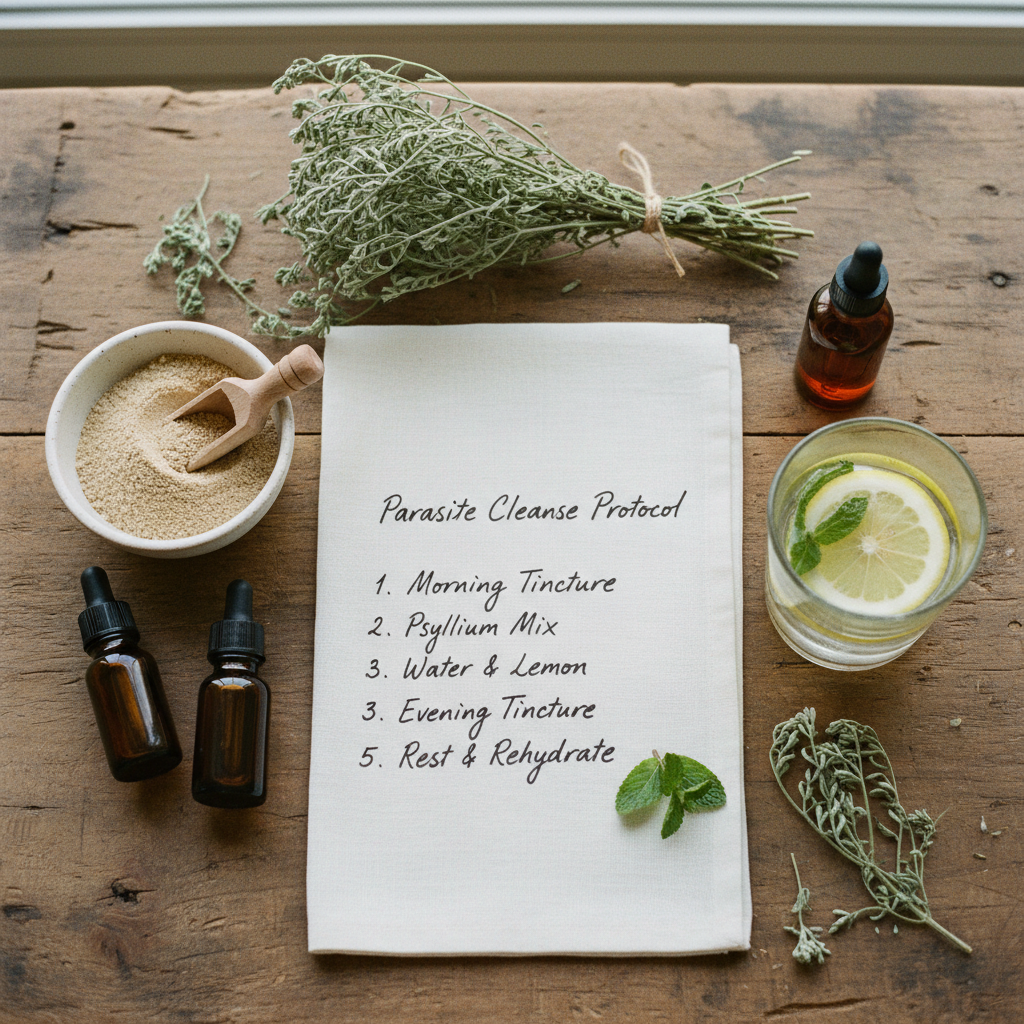
Morning (empty stomach): Biofilm enzyme (if using), followed 20 minutes later by antiparasitic herbs with water.
30 minutes before breakfast: Binder with a full glass of water.
Breakfast: Whole-food meal, low sugar. Pumpkin seeds, eggs, avocado, and leafy greens are common choices.
Midday: Second dose of antiparasitic herbs (if protocol calls for twice-daily dosing). Binder 30 to 60 minutes later.
Afternoon: Hydration, light movement, drainage support.
Evening: Dinner with antiparasitic foods incorporated. Magnesium before bed if needed for bowel support.
Throughout the day: Plenty of water, rest as needed, and attention to how your body is responding.
Affiliate disclosure
We earn a commission if you buy through the links in this section. It costs you nothing extra and does not change what we recommend.

If you’d like a structured next step
The RogersHood ParaFy Kit is a 30-day herbal parasite cleanse protocol that follows a layered, drainage-first approach. Readers who want a concrete place to start can use code JOSH10 for 10% off.
Affiliate disclosure: humanparasitecleanse.com may earn a commission if you purchase through this link, at no additional cost to you. We only recommend products that align with the educational framework on this site.
Frequently Asked Questions
Do I need to buy a specific kit, or can I assemble my own protocol?
You can assemble your own protocol by sourcing individual herbs (wormwood, black walnut hull, clove) and binders separately. The advantage of a pre-made kit is that the herbs are dosed and timed to work together, which removes guesswork. The advantage of assembling your own is flexibility and cost control. Either approach can work if you follow the core principles: drainage first, life-cycle coverage, binders included, and enough time for the protocol to complete.
What should I eat during a parasite cleanse?
Focus on whole, unprocessed foods. Vegetables (especially bitter greens), quality proteins, healthy fats, pumpkin seeds, garlic, ginger, coconut, and fermented foods are all supportive. Reduce or eliminate added sugar, refined carbohydrates, alcohol, and heavily processed foods. Some practitioners recommend reducing dairy and gluten temporarily to lower gut inflammation. Hydration is critical throughout.
How do I know when the cleanse is finished?
The active phase of most herbal protocols runs 30 days, which covers one full parasite reproductive cycle. The cleanse is considered “complete” when the active phase ends, but many people do a second round after a break. Signs that the process has been effective include symptom resolution, improved energy, better digestion, and reduced cravings. If symptoms return after stopping, a repeat round may be indicated.
Can I take binders at the same time as my herbs?
No. Binders are non-selective, meaning they will bind the herbal compounds along with the toxins. Take binders at least 30 to 60 minutes away from herbs, food, and medications. A common approach is to take herbs first thing in the morning and again in the evening, with binders spaced in between.
Is it normal to feel emotional during a parasite cleanse?
Many people report heightened emotions, mood swings, vivid dreams, or temporary anxiety during the active cleanse phase. Some practitioners attribute this to the release of stored toxins and metabolic byproducts from dying organisms. Others note that the gut-brain connection means any significant gut disruption can affect mood. These experiences are typically temporary and tend to resolve as the cleanse progresses and the body adjusts.
Related reading
- Best parasite cleanse: RogersHood ParaFy review
- Parasite die-off symptoms explained
- Parasite cleanse for humans: what to expect
- Fulvic foot soak: cellular drainage support
- Parasite glossary: every term explained
- Black walnut, wormwood and clove: how the trio works
- ParaFy vs ParaGuard: which parasite cleanse is right for you?
- When to take a binder during a parasite cleanse
- ParaFy vs the Amish parasite cleanse: same herbs, different approach
- Amish dewormer: what the Amish actually use for worms