What Is Black Walnut Hull?
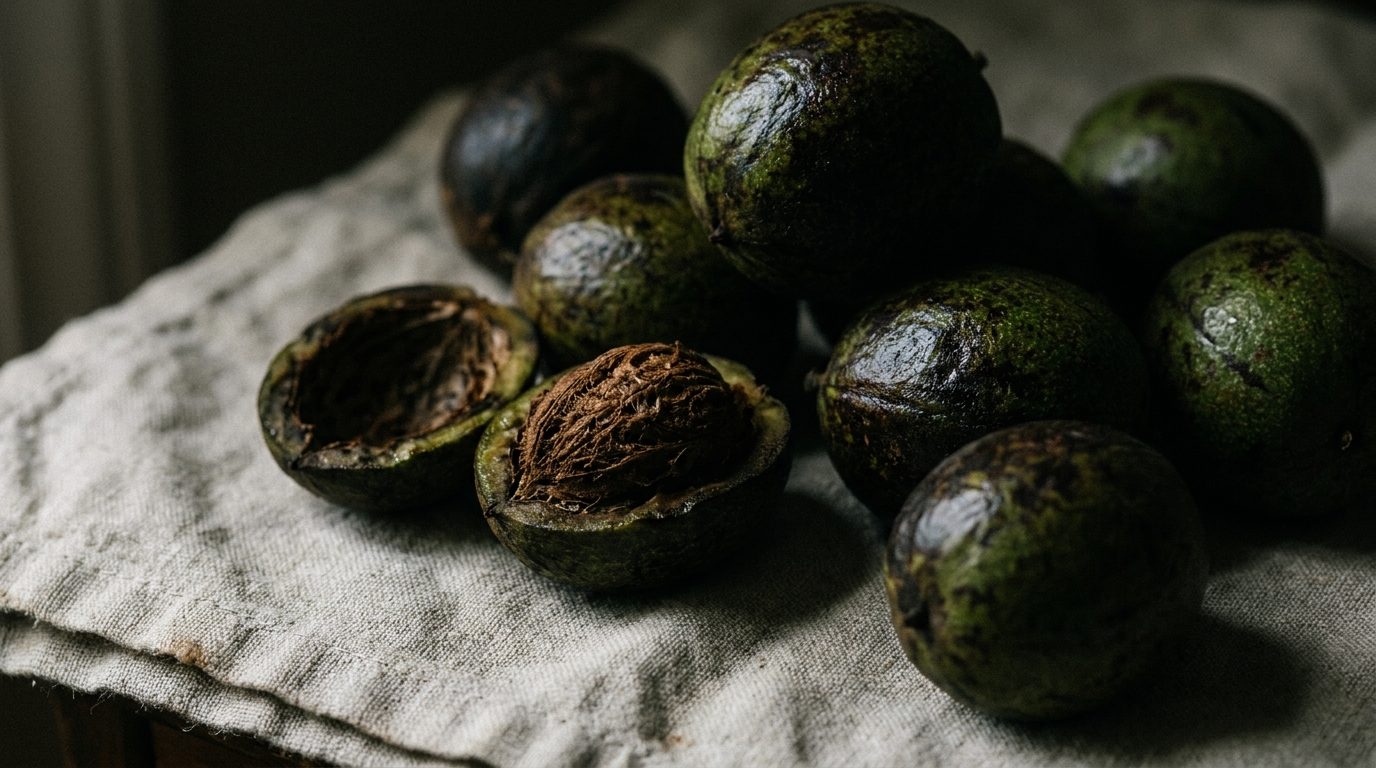
Black walnut hull is the green outer covering of the unripe black walnut fruit. It is used traditionally in antiparasitic herbal protocols, often combined with wormwood and clove.
Classification: Other › Black Walnut Hull
Key Takeaway
Black walnut hull is a core ingredient in the classic Hulda Clark parasite protocol and remains common in modern herbal cleanse kits. Most protocols use short courses rather than long-term daily dosing.
Why This Matters
Black walnut hull contains juglone, tannins, and other compounds that have shown activity against a range of intestinal parasites in laboratory settings. It is most commonly taken as a tincture made from the unripe green hull, and traditional use pairs it with wormwood and clove to cover different parasite life stages. People with a tree-nut allergy should avoid black walnut preparations, and high doses can cause digestive upset.
How Black Walnut Hull Relates to Parasites and Cleansing
Black walnut hull is one third of the best-known herbal parasite combination in Western folk medicine: black walnut, wormwood and clove. That trio is the backbone of the Amish parasite cleanse, and the same three herbs appear in the tincture at the centre of the RogersHood ParaFy Kit. If you have read about a traditional cleanse and a modern one and wondered why the ingredient lists rhyme, this is why.
Within the trio, black walnut is traditionally understood as the component aimed at adult organisms in the digestive tract, with wormwood associated with larval stages and clove with eggs. That division of labour is the traditional rationale for taking the three together rather than one at a time, and for running a cleanse long enough to cover a full lifecycle.
The Active Compounds
The compound most often credited is juglone, a naphthoquinone that reaches its highest concentration in the hull, roots and fruit rather than the nut itself. Alongside it, the hull is markedly astringent because of its tannin content, and the traditional view is that the two work together in the gut rather than juglone acting alone.
Laboratory work suggests juglone interferes with basic metabolic processes in susceptible organisms — inhibiting enzymes they depend on, and generating reactive oxygen species that cause oxidative damage inside the organism. Some studies point to interference with acetylcholinesterase, an enzyme central to nerve function in worms.
What the Evidence Actually Shows
In laboratory settings, black walnut extracts have shown activity against a range of organisms, including protozoa such as Trypanosoma cruzi, Leishmania donovani and Toxoplasma gondii, and activity against parasitic worms including Schistosoma mansoni.
The important qualifier is that almost all of this comes from in vitro work or animal models. Large human clinical trials are not there. Traditional use spans roughly two centuries across Native American and European herbal medicine, and the laboratory findings are consistent with that tradition — but consistency is not the same as proof, and anyone telling you the human question is settled is overstating it.
Why It Is Almost Always the Green Hull
Traditional preparations call for the hull harvested while it is still green, before it blackens and drops. Juglone content is highest at that stage, which is why quality tinctures specify green hull and why the timing of the harvest is treated as part of the recipe rather than an afterthought. You can see how that plays out in practice in the traditional preparation method.
Safety Notes
Black walnut is a tree nut, and anyone with a tree nut allergy should avoid it entirely. It is generally avoided in pregnancy and breastfeeding. It stains — skin, cloth and worktops — which is worth knowing before you make anything at home. And as with any antiparasitic herb, it is usually taken in defined courses rather than continuously.
Related reading: Black Walnut, Wormwood and Clove, Wormwood, Clove.
Affiliate disclosure
If you would like a structured next step
Human Parasite Cleanse is an independent site. We earn a commission on purchases made through the links below, including when the discount code is used. That costs you nothing extra and does not change what we recommend. The RogersHood ParaFy Kit is a 30-day herbal parasite cleanse protocol that follows a layered, drainage-first approach. Readers who want a concrete place to start can see our full ParaFy Kit review or use code JOSH10 for 10% off. Consult a qualified healthcare provider for diagnostic questions and treatment of specific conditions.
Affiliate disclosure: humanparasitecleanse.com may earn a commission if you purchase through this link, at no additional cost to you. We only recommend products that align with the educational framework on this site.
Frequently Asked Questions
What is black walnut hull used for?
It is used in herbal antiparasitic protocols, particularly formulas intended to target adult worms alongside other herbs that address eggs and larvae.
Is black walnut safe?
It is generally well tolerated in short courses. People with tree-nut allergies should avoid it, and high doses can cause nausea or digestive upset.
How is black walnut hull taken?
Most often as a liquid tincture in a multi-herb parasite formula, dosed daily for a defined period such as 2 to 4 weeks.
