TLDR
There is no single “Amish dewormer”. The phrase covers two things: a household tradition of bitter-herb tinctures built on black walnut hull, wormwood and clove, taken in short courses a couple of times a year, and a handful of small-batch products sold under Amish or Mennonite names that bottle roughly the same blend, sometimes with garlic, oregano, cinnamon or ginger added. Both are the same idea as the classic herb trio. Neither is a substitute for treatment if you have a diagnosed infection.
Below: how the Amish actually deworm, what’s in the products sold as Amish dewormers, how they compare with a modern kit, and how to use any of them sensibly.
What People Mean by “Amish Dewormer”
Search the phrase and you’ll find two very different things wearing the same name.
The first is a habit. In many Amish and Old Order Mennonite households, deworming is a routine seasonal thing, done for animals and people alike, with herbs grown or foraged nearby. Nobody calls it a protocol. It’s just something you do in spring and autumn, the way you’d clean the gutters.
The second is a product. Small family businesses in Amish country, and a growing number of sellers who simply borrow the name, bottle a tincture and sell it as an “Amish dewormer” or “complete wormer”. These are real products with real ingredient lists, and they’re worth looking at properly.
What connects the two is the herbs. That’s the part this guide is really about.
How the Amish Actually Deworm
Here’s the honest picture, without the mystique.
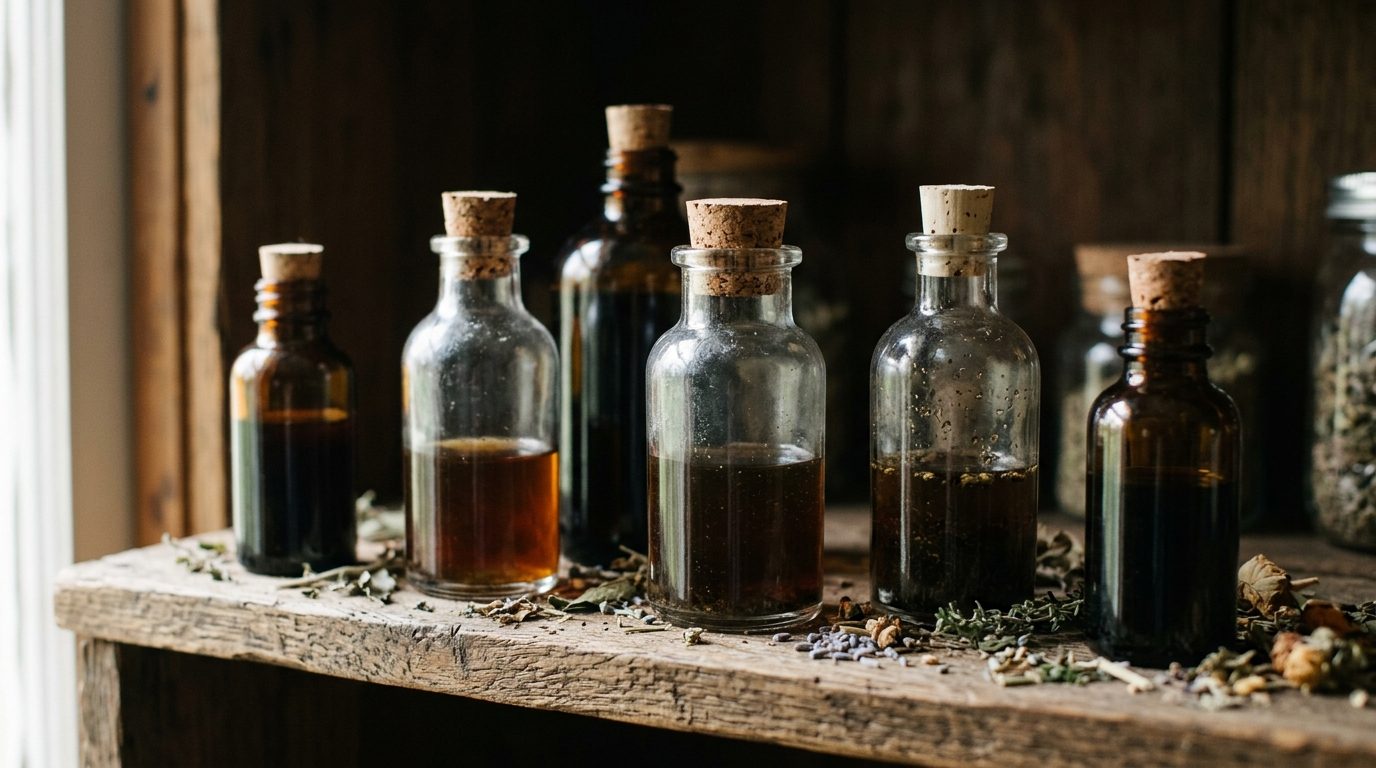
Rural households kept worms in check the way farms always have: routinely, seasonally, and with what grew within walking distance. For people, that meant a bitter tincture or a strong tea made from the green hulls of the black walnut tree, wormwood from the garden edge, and cloves from the pantry. Sometimes garlic, eaten rather than bottled. Sometimes pumpkin seeds, especially for children.
It was taken in small amounts, a few times a day, for a couple of weeks, then stopped. Then, a few months later, repeated. Not because a worm had been seen, but because that’s when you did it.
Two things are worth noticing. The routine was short and cyclical, which happens to match how modern herbalists advise using wormwood. And it sat inside a life with a lot of built-in drainage: physical work, garden food, well water, early nights. The herbs weren’t doing the job alone.
If you want the preparation itself, proportions and both methods, that’s in the Amish parasite cleanse recipe. If you want the fuller story of the tradition and whether it holds up, start with the Amish parasite cleanse guide.
What’s in the Products Sold as Amish Dewormers
The better-known ones share a base and vary at the edges.

| Ingredient | In the household tradition | In “complete wormer” style products | Why it’s there |
|---|---|---|---|
| Black walnut hull | Yes, green hull | Yes | The backbone. Traditionally for adult-stage worms |
| Wormwood | Yes | Yes | Larval stages, bitter digestive support |
| Clove | Yes | Yes | Eggs, traditionally |
| Garlic | Eaten | Often included | Antimicrobial, biofilm |
| Oregano | Rarely | Often included | Broad antimicrobial |
| Cinnamon, ginger | Sometimes, for taste | Common | Warming, settle the stomach, mask bitterness |
| Pumpkin seed | Yes, especially for children | Sometimes | Gentle, traditional against tapeworm |
So a bottled “Amish complete wormer” is, in most cases, the household trio with a few kitchen herbs added to round it out and make it easier to swallow. That’s not a criticism. It’s a sensible formula. But it’s worth knowing that the “complete” on the label refers to the herbs, not to anything else a cleanse needs.
The reasoning behind the three core herbs, and what the research actually shows for each, is laid out in the guide to black walnut, wormwood and clove.
Buying One: What to Check
Because the name isn’t protected, anyone can put “Amish” on a bottle. A few questions sort the genuine small-batch products from the opportunists.
Is there a full ingredient list? Every herb, in order. “Proprietary blend” with no detail is a warning sign on a product that’s meant to be traditional and simple.
Is it green hull? Black walnut loses its key compound as the hull dries. A good tincture is made from fresh green hulls and comes out dark brown to black.
Is there a dose and a duration? Drops per day, days per course, and a break afterwards. Wormwood should not be taken for months on end, and a label that doesn’t say when to stop hasn’t thought about it.
Is there an age? Most say nothing, which means adults only. A smaller pour is not a children’s dose.
Where’s the binder? Almost never included. That’s the gap, and it’s the same gap the household tradition had.
Amish Dewormer vs a Modern Kit
Put an Amish-style wormer next to something like the ParaFy Kit and the first thing you notice is the herbs are nearly identical. Black walnut, wormwood, clove, garlic. ParaFy adds hawthorn. The wormer might add oregano or cinnamon.
The second thing you notice is everything else. The kit sequences a drainage tincture, a heavy-metal tincture and a charcoal binder around the herbs, on a printed 30-day schedule, with a stated age of three and up. The wormer is one bottle, and the rest is up to you.
Which is right depends on what you’re paying for. That comparison is made properly, table by table, in ParaFy vs the Amish parasite cleanse.
Same Herbs, With the Rest of the Protocol Included
The ParaFy Kit keeps the black walnut, wormwood and clove base and adds drainage, heavy-metal support and a binder.
What’s in the ParaFy KitUsing Any of Them Sensibly

Whether it’s a bottle from Lancaster County or a jar from your own kitchen, the rules are the same, because the herbs are the same.
Short courses. Two to four weeks on, a break, then repeat if needed. This is how the tradition did it and it’s how wormwood should be used.
Start low. A few drops, build over a week. Bitter herbs on an empty stomach can turn the stomach; a little food is a fair compromise.
Open the exits first. Bowels moving daily, water, movement. Then a binder, taken two hours away from the herbs. This is the step the Amish didn’t need to write down and you probably do.
Skip it entirely if you’re pregnant or breastfeeding, have a seizure disorder, or are on blood thinners. Be careful with a nut allergy. Children under three get none of it, and older children only a formula that states an age.
When a Dewormer Means Medicine
One more honest line. “Dewormer” in a pharmacy means mebendazole, albendazole, pyrantel or ivermectin, and those are what treat a diagnosed infection. Pinworms in a child, a worm seen in the toilet, a positive stool test: that’s a doctor, and the herbs are not a replacement.
The herbal tradition is for maintenance, the seasonal habit, the “just in case”. Where the two approaches meet and where they part is the subject of the dewormer for humans guide.
The Bottom Line
An Amish dewormer is the black walnut, wormwood and clove tradition, either made at home or bottled by someone who grew up with it. The products are mostly honest versions of that, with a few kitchen herbs added. What none of them include is the drainage and binding that a modern life needs and a farm life didn’t.
Use them the way they were meant to be used. Short, cyclical, with the exits open.
And that’s worth knowing.
Curious About Where to Start?
The same herbal tradition, put together as a structured 30-day protocol rather than a single bottle.
Read the ParaFy Kit ReviewFrequently Asked Questions
What is the Amish dewormer made of?
Black walnut hull, wormwood and clove at the core, made as an alcohol tincture or a strong tea. Bottled “complete wormer” products usually add garlic and oregano, and often cinnamon or ginger to settle the stomach and mask the bitterness. Pumpkin seed sometimes appears, especially in versions meant for children.
How do the Amish deworm?
Routinely and seasonally, usually spring and autumn, with a bitter herb tincture taken in small amounts a few times a day for a couple of weeks, then stopped. It’s treated as ordinary household maintenance rather than a treatment for a diagnosed problem, and it sat inside a physically active, garden-fed life that kept drainage moving on its own.
Is an Amish dewormer safe?
For most healthy adults, in short courses at the stated dose, the herbs are well tolerated. The cautions are the same as for any wormwood and black walnut product: not in pregnancy or breastfeeding, not with a seizure disorder, care with nut allergies and blood thinners, and not for young children. Cycle it rather than taking it continuously.
Does the Amish dewormer work for humans?
The herbs in it have laboratory and animal evidence of antiparasitic activity, and centuries of traditional use. There’s no human clinical trial of the combination. So it’s plausible for maintenance, and it’s not proven, and anyone claiming otherwise is ahead of the evidence. For a diagnosed infection, use the medicine your doctor gives you.
Is the Amish dewormer the same as the Amish parasite cleanse?
Yes, in practice. “Dewormer” is the older, plainer word for the same bitter-herb tradition. The cleanse guides on this site describe the same herbs, preparation and timing. The only real difference is that “dewormer” is also used for bottled products sold under Amish names.
How often should you take an Amish dewormer?
The tradition is a short course, two to four weeks, a couple of times a year. Modern herbal guidance lands in the same place: a defined course, a break of a week or two, then repeat only if needed. Wormwood is not something to take for months without a pause.