TLDR
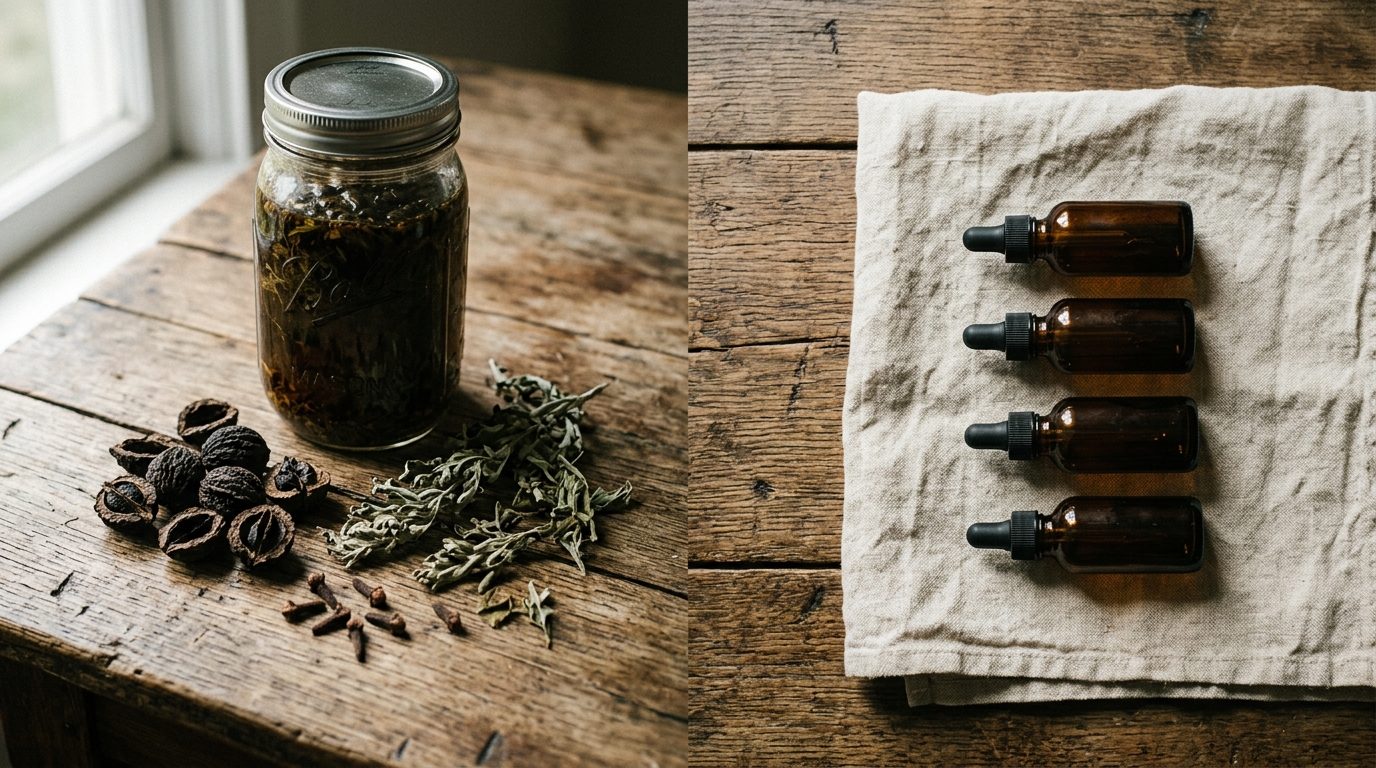
The Amish parasite cleanse and the ParaFy Kit are built on the same three herbs: black walnut hull, wormwood and clove. The Amish version is a homemade tincture or tea, cheap and unstandardised, with nothing for drainage. ParaFy adds hawthorn and garlic to that trio, standardises the dose, and packages drainage, heavy-metal support and a binder alongside it, at around $100 for 30 days. If you have the hulls and the patience, make the Amish version. If you want the structure done for you, that’s what the kit is.
Below: the herbs side by side, what the two extra ones do, why the drainage gap matters, cost and effort, and how to combine the best of both.
Two Names for One Idea
If you’ve read about the Amish parasite cleanse, you’ve probably also come across ParaFy. And you may have wondered whether they’re rivals, or whether one is a version of the other.
The honest answer is the second one. They’re the same herbal idea at two different levels of finish. One is a recipe. The other is a protocol built on that recipe.
So the question isn’t which is right. It’s which level of finish you want to pay for, in money or in effort.
The Herbs, Side by Side
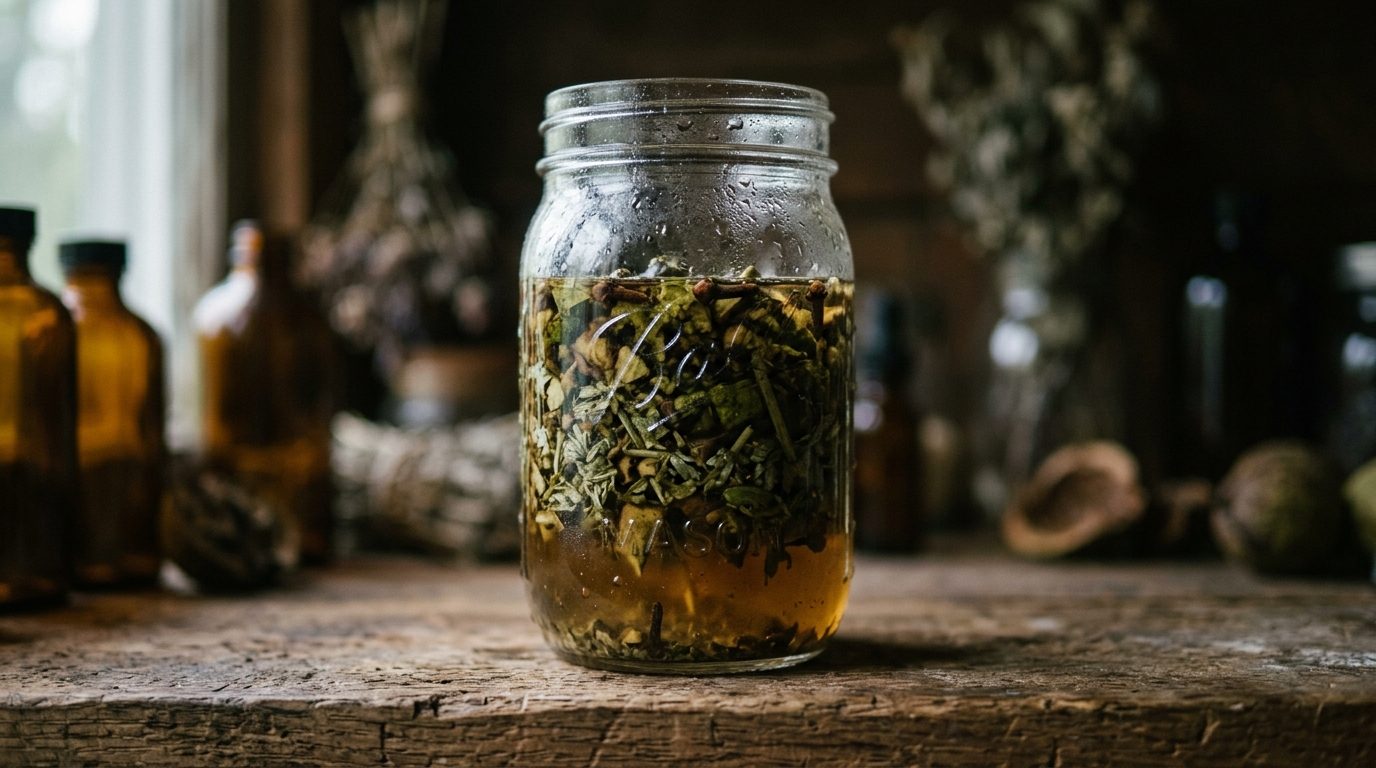
| Herb | Amish cleanse | ParaFy tincture | Role |
|---|---|---|---|
| Black walnut hull | Yes, green hull | Yes | Adult-stage organisms (traditional) |
| Wormwood | Yes | Yes | Larval stages, digestive bitter |
| Clove | Yes | Yes | Eggs (traditional), gas and bloating |
| Hawthorn berry | No | Yes | Circulation and drainage support |
| Garlic | Sometimes, in the diet | Yes | Antimicrobial, biofilm |
| Base | Vodka or grain alcohol, or hot water | Grain alcohol 20 to 25%, raw honey, distilled water | Extraction and preservation |
The top three rows are the whole story of the Amish cleanse. The reasoning behind those three, and what the research says about each, is in the guide to black walnut, wormwood and clove. If you’ve read that, you already understand the core of both products.
What the Two Extra Herbs Are For

Neither is there to kill anything. That’s worth knowing, because it tells you what the kit is trying to do differently.
Hawthorn berry is a circulatory herb. In the context of a cleanse it’s there to keep blood and lymph moving, so what the bitter herbs disturb has a route out. It’s the first hint of the kit’s design philosophy: support the exit as much as the attack.
Garlic brings its own antimicrobial compounds, and it’s one of the few kitchen herbs with reasonable evidence for disrupting biofilm, the slimy shelter that organisms build in the gut. Amish households often ate plenty of it. The kit puts it in the bottle so it’s there whether or not dinner includes it.
Together they turn a three-herb attack into a five-herb formula with two supporting roles. The full breakdown is in what’s actually in the ParaFy Kit.
The Gap the Recipe Leaves Open
Here’s the thing about every Amish recipe you’ll find. It stops at the herbs.
That made sense in the households it came from. People who worked outdoors, ate from the garden, drank a lot of water and moved all day had drainage taken care of by their lives. The recipe didn’t need to mention bowels, liver or lymph because none of that was a problem.
Most people reading this aren’t living that way. And when the herbs stir things up in a body whose exits are sluggish, what gets released is reabsorbed. That’s the headache, the fatigue, the fog that people call die-off. A good share of it is really the absence of a binder and open drainage pathways.
This is the actual difference between the two approaches. Not the herbs. The three products that sit around the herbs in the kit.

| Step | Amish cleanse | ParaFy Kit |
|---|---|---|
| Antiparasitic herbs | The tincture or tea you made | ParaFy tincture, 15 drops three times a day |
| Drainage | Not addressed. Your lifestyle, or nothing | Sustain tincture (usnea, Oregon grape root, peppermint) |
| Heavy metals and liver | Not addressed | Metal Flush tincture (burdock, dandelion, cilantro, white willow, lungwort) |
| Binder | Not addressed. Buy separately and time it yourself | Cinnabin capsule (coconut charcoal, Ceylon cinnamon), morning or night |
| Schedule | Whatever the family passed down | Printed, 30 days, with the two-hour binder gap stated |
Want the Amish Tradition With the Gaps Filled?
The ParaFy Kit keeps the three herbs and adds the drainage, metals and binder steps the recipe never mentions.
Read the ParaFy Kit ReviewPotency: The Thing You Can’t See in a Jar
Make a hull tincture at home and you’ll get something that works. What you won’t know is how strong it is.
Green hulls vary by tree, by season, by how long they sat before you chopped them. Wormwood varies by where it grew. A six-week steep in one kitchen isn’t the same as a six-week steep in another. That’s not a criticism. It’s what a folk remedy is.
A prepared tincture is made the same way every batch, from the same sourcing, so 15 drops means the same thing on day one and day thirty. For a first cleanse, when you’re still learning how your body responds, that consistency is worth more than it sounds.
Fair counterpoint: neither one tells you milligrams per dose. Tinctures don’t. Standardised isn’t the same as quantified.
Cost and Effort, Honestly
| Amish cleanse | ParaFy Kit | |
|---|---|---|
| Money | Near zero with a walnut tree; $20 to $40 in dried herbs and vodka otherwise | $100, or $85 on subscription |
| Lead time | Four to six weeks for a tincture; a tea is same-day | Delivery |
| Sourcing | Green hulls are seasonal and regional | Done |
| Planning | Dose, cycle, binder and drainage all on you | Printed schedule |
| Children | No guidance; adult tincture is not a children’s dose | Stated for ages 3 and up |
Roughly, you’re trading $60 to $80 for six weeks of lead time, a shopping problem, and the job of designing the supporting protocol yourself. Some people enjoy that job. If you do, the recipe guide gives you the proportions and both methods.
The Middle Path
You don’t have to choose all of one or all of the other.
Make the Amish tincture, and add the two things it’s missing. A binder, taken two hours away from the herbs. And a deliberate effort on drainage: water, daily bowel movements, movement, something bitter or a liver-supporting herb before you start.
That gets you most of the way to what the kit does, for a fraction of the price, with more of your own attention. It’s the option most recipe pages never mention, and it’s a good one.
Who Should Skip Both
Same herbs, same rules. Not during pregnancy or breastfeeding. Not with a seizure disorder. Careful with a nut allergy, and careful with blood thinners. The kit adds chemotherapy to its list. Children under three get neither, and older children get only a formula that states an age.
And if you have a diagnosed infection, both of these are the wrong tool. The dewormer for humans guide explains where herbs stop and medicine starts.
The Bottom Line
ParaFy is the Amish cleanse with the parts the recipe leaves out. Same three herbs, plus hawthorn and garlic, plus drainage, metals and a binder, on a schedule.
If you’ll genuinely make the tincture and build the support around it, do that. If you know you won’t, the kit is the tradition with the gaps closed. Either way, the herbs are only half of it.
And that’s worth knowing.
Ready for the Structured Version?
Five herbs, drainage, heavy-metal support and a binder, sequenced over 30 days.
View the ParaFy KitFrequently Asked Questions
Is ParaFy the same as the Amish parasite cleanse?
It’s built on it. Both use black walnut hull, wormwood and clove as the core. ParaFy adds hawthorn and garlic to the tincture and packages separate drainage, heavy-metal and binder products around it. The Amish version is the herbs alone, made at home.
Is the homemade Amish cleanse as strong as ParaFy?
Nobody can tell you, because a homemade tincture’s potency depends on the hulls, the herbs and the steep, and it changes batch to batch. A prepared tincture is consistent from dose to dose. Neither lists milligrams, so “stronger” isn’t measurable either way. Consistency is the real difference.
Can I do the Amish cleanse and add a binder myself?
Yes, and it’s the best version of the homemade route. Take activated charcoal or bentonite clay two hours away from the herbs, keep your bowels moving daily, and drink plenty of water. That closes most of the gap between the recipe and the kit.
Why does ParaFy include hawthorn and garlic?
Hawthorn supports circulation and drainage so what the bitter herbs release has a route out. Garlic adds antimicrobial compounds and helps disrupt biofilm. Neither is there to kill parasites directly; they’re the supporting roles the Amish recipe relied on lifestyle to cover.
Which is cheaper?
The Amish cleanse, by a wide margin. Near zero if you have access to a black walnut tree, $20 to $40 in dried herbs and alcohol if not. ParaFy is $100 for the 30-day kit, or $85 on subscription. The difference buys standardisation, the three supporting products and the schedule.
Can children take either?
Under three, neither. ParaFy states a floor of three. The Amish tincture has no children’s guidance at all, and a smaller pour of an adult preparation is not a child’s dose. For anyone under twelve, a formula that states an age, at the stated dose, with a pediatrician’s knowledge, is the only sensible route.