What Is Bentonite Clay?
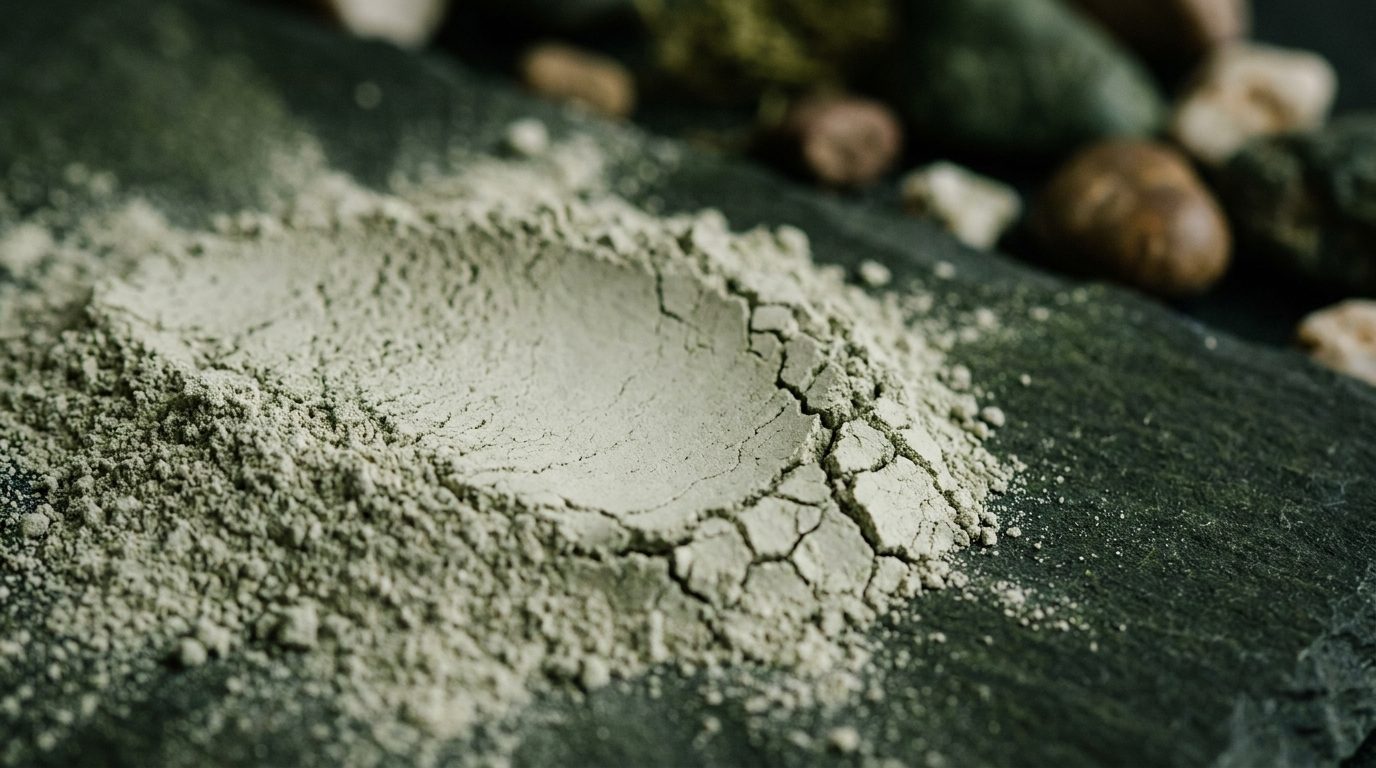
Bentonite clay is a natural clay formed from volcanic ash, with a strong negative electrical charge that allows it to bind positively charged toxins and heavy metals.
Classification: Other › Bentonite Clay
Key Takeaway
Bentonite clay is a staple binder in natural detox protocols, used internally and topically. Like other binders, it is taken away from medications and supplements.
Why This Matters
Bentonite clay has been used for centuries by traditional cultures for digestive and skin issues. Its layered structure and negative charge allow it to adsorb a range of toxins, heavy metals, and some bacteria and parasites in the gut. Internally, it is used as a binder in cleanse protocols, often alongside activated charcoal. Topically, it is used in masks, wraps, and baths. Food-grade bentonite is required for internal use, and adequate hydration is important to prevent constipation.
How Bentonite Clay Relates to Parasites and Cleansing
Bentonite clay is used during a cleanse for the same reason as any other binder: to catch material in the gut so it leaves the body rather than being reabsorbed. What makes it worth understanding separately is that it does this through different chemistry from charcoal, which is why some protocols use both.
Where activated charcoal traps molecules on a porous surface, bentonite works largely by swapping ions. That difference means the two are not simply interchangeable, and it is part of why people who found one binder unhelpful sometimes do better on the other.
How It Works: Cation Exchange
Bentonite is a swelling clay, made up mostly of montmorillonite. Its structure is layered, and most of its roughly 800 square metres per gram of surface area sits between those layers rather than on the outside.
Held loosely in that interlayer space are common cations — calcium, sodium, magnesium. When the clay meets something that binds more tightly, such as lead, cadmium or mercury, it trades: the loosely held mineral is released and the tightly binding one is locked into the clay and carried out. That exchange is the mechanism, and it explains both the appeal and the caution around this material.
What the Evidence Actually Shows
Bentonite has a stronger human evidence base than most binders, though it comes from an unexpected direction. The best-studied application is aflatoxin, a mould toxin that contaminates staple crops in some parts of the world. In laboratory conditions bentonite binds aflatoxin with very high efficiency, and that finding has been carried through into large-scale human studies in regions with contaminated food supplies, where researchers measured reductions in aflatoxin biomarkers.
That is genuinely meaningful: it shows the binding mechanism holds up in real people eating real food, not only in a test tube. It is worth being clear, though, that this research was about a specific mould toxin, not about parasite die-off. The mechanism transfers more readily than the evidence does.
Sourcing Is a Genuine Safety Issue
This is the part most articles skip. The same chemistry that lets bentonite hold onto heavy metals means clay dug from the wrong ground can carry them. In the acidic environment of the stomach, metals present in a poor-quality clay can leach out rather than stay locked in.
The practical answer is not to avoid bentonite but to be particular about it: food-grade clay, from a supplier who publishes a current certificate of analysis showing heavy metal content. If a product cannot show you that, it has not earned a place in a protocol whose whole purpose is reducing your toxic load. As with any binder, keep it well away from medications, supplements and meals, and keep your water intake up.
Related terms: Binder, Activated Charcoal, Zeolite.
Affiliate disclosure
If you would like a structured next step
Human Parasite Cleanse is an independent site. We earn a commission on purchases made through the links below, including when the discount code is used. That costs you nothing extra and does not change what we recommend. The RogersHood ParaFy Kit is a 30-day herbal parasite cleanse protocol that follows a layered, drainage-first approach. Readers who want a concrete place to start can see our full ParaFy Kit review or use code JOSH10 for 10% off. Consult a qualified healthcare provider for diagnostic questions and treatment of specific conditions.
Affiliate disclosure: humanparasitecleanse.com may earn a commission if you purchase through this link, at no additional cost to you. We only recommend products that align with the educational framework on this site.
Frequently Asked Questions
What is bentonite clay used for?
As a binder in detox and parasite cleanse protocols, for digestive support, and topically for skin and wound applications.
Is bentonite clay safe?
Food-grade bentonite is generally considered safe for short-term use with adequate water. Industrial or pool-grade clays should never be taken internally.
How is bentonite clay different from activated charcoal?
Both are binders, but they work on different compounds. Many cleanse protocols use them together for broader coverage.
