What Is Wormwood?
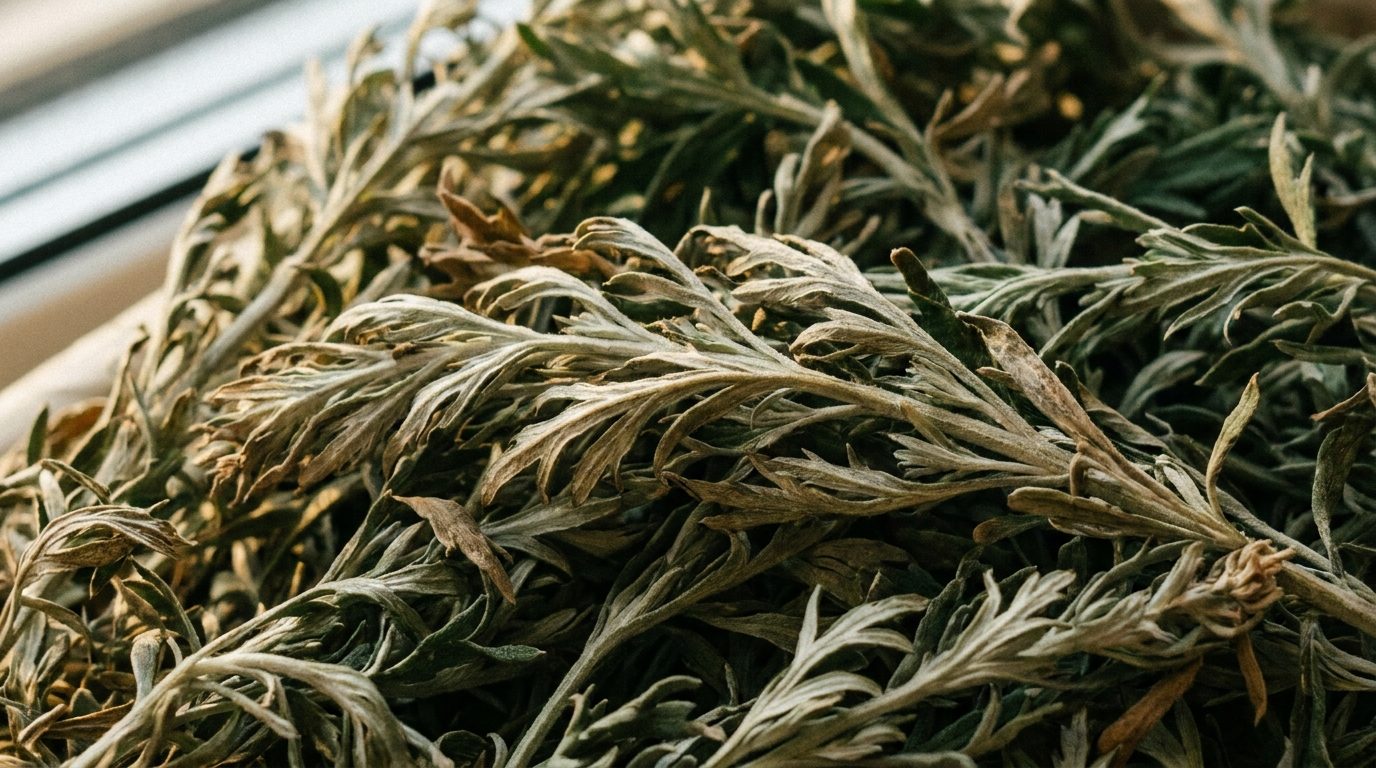
Wormwood (Artemisia absinthium) is a bitter European herb with a long history of use in traditional antiparasitic preparations. It contains sesquiterpene lactones and thujone that have shown activity against some intestinal worms and protozoa in laboratory studies.
Classification: Other › Wormwood
Key Takeaway
Wormwood is one of the most recognized traditional antiparasitic herbs and a common ingredient in modern herbal cleanse protocols. It should be used at appropriate doses and for limited periods, because high doses of thujone can be neurotoxic.
Why This Matters
Wormwood has been used for centuries in European folk medicine and later incorporated into the famous Hulda Clark parasite protocol alongside black walnut hull and clove. It is commonly prepared as a tincture and included in multi-herb formulas rather than used alone. Wormwood is not recommended during pregnancy, breastfeeding, or for children under three, and prolonged daily use is generally avoided. Artemisinin, a related compound derived from Artemisia annua, is the basis of modern antimalarial medications.
How Wormwood Relates to Parasites and Cleansing
Wormwood is the second herb in the classic trio of black walnut, wormwood and clove — the combination behind the Amish parasite cleanse and behind the tincture in the RogersHood ParaFy Kit. Its name is not decoration; it has been used against intestinal worms in European herbal practice for centuries.
In the traditional division of labour within the trio, wormwood is associated with larval stages, sitting between black walnut hull for adult organisms and clove for eggs. Wormwood is also a pronounced bitter, and bitters have their own traditional role in stimulating digestive secretions — part of why it appears in digestive formulas that have nothing to do with parasites.
The Active Compound
The compound most associated with wormwood’s antiparasitic reputation is thujone, a prominent constituent of its essential oil. Alongside thujone the plant contains sesquiterpene lactones responsible for its intense bitterness.
Thujone is also the reason wormwood is treated with more caution than the other two herbs in the trio, and the reason it is normally taken in short defined courses rather than continuously.
What the Evidence Actually Shows
The most concrete evidence comes from veterinary work. Wormwood has shown anthelmintic activity against Haemonchus contortus in sheep, and in vivo work in pigs found effects against gastrointestinal parasites, in that case studied alongside garlic.
Human evidence is thin. There is a long ethnobotanical record of wormwood being used as an anthelmintic and antiprotozoal in both people and animals, and modern laboratory work on its antimicrobial capacity, but well-designed human trials for parasitic infection are essentially absent. The tradition is deep; the clinical proof is not.
Why Wormwood Is Cycled Rather Than Taken Continuously
Thujone is a neurotoxin at sufficient dose. In large amounts it can cause serious effects including convulsions, and there is no well-established safe upper limit for prolonged use. This is not a reason for alarm about a short, sensibly dosed course — it is the reason traditional protocols are structured as courses in the first place.
Wormwood is generally avoided in children, in pregnancy and breastfeeding, and by anyone with severe liver or kidney disease or a seizure disorder. Because the doses used in serious antiparasitic work sit at the higher end of the range, that end of the spectrum is best approached with a qualified practitioner rather than alone. If you take prescription medication, raise it with your prescriber before starting.
Related reading: Black Walnut, Wormwood and Clove, the traditional preparation method, Clove.
Affiliate disclosure
If you would like a structured next step
Human Parasite Cleanse is an independent site. We earn a commission on purchases made through the links below, including when the discount code is used. That costs you nothing extra and does not change what we recommend. The RogersHood ParaFy Kit is a 30-day herbal parasite cleanse protocol that follows a layered, drainage-first approach. Readers who want a concrete place to start can see our full ParaFy Kit review or use code JOSH10 for 10% off. Consult a qualified healthcare provider for diagnostic questions and treatment of specific conditions.
Affiliate disclosure: humanparasitecleanse.com may earn a commission if you purchase through this link, at no additional cost to you. We only recommend products that align with the educational framework on this site.
Frequently Asked Questions
What is wormwood used for?
Wormwood is traditionally used in parasite cleansing protocols, digestive bitters, and as a historical flavoring in absinthe. Its primary modern herbal use is in short-term antiparasitic formulas.
Is wormwood safe?
Wormwood is generally considered safe at typical herbal doses for short periods. High doses or prolonged use can cause neurotoxic effects due to thujone. It should be avoided in pregnancy, breastfeeding, and in young children.
Does wormwood actually kill parasites?
Laboratory studies show activity against some worms and protozoa, but clinical evidence in humans is limited compared to prescription antiparasitic drugs. It is best viewed as a traditional supportive herb rather than a substitute for medical treatment.
